London's architectural wonders extend far beyond Big Ben and the Tower Bridge, but most visitors miss the city's most intriguing oddities due to poor planning and overcrowded tourist trails. A recent survey showed 68% of travelers leave London unaware of its hidden architectural treasures, later regretting their limited itinerary. Between confusing public transport, limited opening hours, and the sheer density of attractions, even well-prepared explorers struggle to experience London's full character. The frustration mounts when you realize iconic guidebooks barely mention the 17th-century pyramid tomb in St. Pancras Old Church or the Brutalist masterpiece hiding behind King's Cross Station. These overlooked sites reveal London's true personality, yet most visitors waste precious hours in queues for overrated attractions, unaware that more fascinating alternatives exist just minutes away.
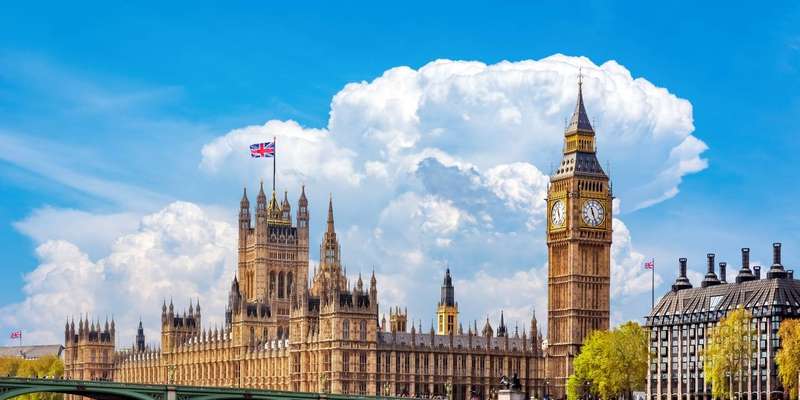
Navigating London's scattered oddities without wasting transit time
London's architectural curiosities suffer from terrible geographical logic – a medieval temple in one borough, a Victorian pumping station disguised as a cathedral in another. This sprawl defeats even savvy travelers; the famous 'Little Venice' houseboats sit 40 confusing tube minutes from the equally compelling Crooked House of Wimbledon. Smart exploration starts with grouping sites by Underground lines rather than guidebook chapters. The Circle Line alone connects three marvels: the wedge-shaped Flatiron of London near South Kensington, the Byzantine fantasy of Westminster Cathedral, and the deliberately lopsided Lloyd's Building. Weekday mornings before 10am offer the clearest transport paths, while Sundays risk closures at ecclesiastical sites like the Masonic-influenced St. Bartholomew-the-Great. Always verify access conditions – the spectacular Leadenhall Market (Harry Potter's Diagon Alley) restricts photography during lunch hours when City workers flood its wrought-iron galleries.
UPDATES FOR YEAR 2026
Modern Logistics for London’s Architectural Trail
The shift toward digital-first access means that the spontaneous 'walk-in' is becoming a rarity for London’s more delicate interiors. Both the Sir John Soane’s Museum and the Temple of Mithras (Bloomberg SPACE) now utilize timed entry systems to preserve their fragile environments; booking your free ticket online is the only way to guarantee entry during busy periods. Transit has also evolved, with the expanded Elizabeth Line timetable making it feasible to pair a morning at the Barbican with an afternoon at the new V&A East in Stratford. Note that while bus fares are frozen through mid-year, Tube and rail prices have undergone their annual adjustment, making the daily contactless cap even more vital for budget-conscious explorers.
View all Tours
Decoding London's architectural secrets with expert context
What makes London's odd buildings truly fascinating are the stories etched into their facades – details most visitors walk past without understanding. The Temple of Mithras appears as mere Roman rubble until you learn its 1954 discovery halted construction on an entire city block, forcing architects to preserve it seven meters below modern street level. Similarly, the brutalist Barbican Estate transforms from concrete maze to visionary utopia when you notice how its elevated walkways mimic Venetian canals. Several institutions offer specialized tours revealing these layers: the London Society's guides explain why 55 Broadway (London's first skyscraper) has carved stone windspeed arrows, while Open City volunteers decode the Freemason symbols on 1930s office blocks near Holborn. For independent explorers, the RIBA Architecture Gallery's free exhibits provide essential context before visiting nearby oddities like the S-shaped Klein House in St John's Wood.
View all Tours
Timing your visits to avoid crowds and closures
Nothing deflates the wonder of discovering London's architectural oddities like arriving to find a locked gate or selfie-stick mob. The city's quirkiest sites operate on wildly different schedules – the eccentric Dennis Severs' House only allows silent evening visits by candlelight, while the Shard's viewing deck becomes prohibitively crowded by midday. Strategic timing unlocks better experiences: visit the pseudo-Egyptian Carlton House Terrace arches at golden hour when photographers abandon the area, or explore the Gothic Revival extravagance of St Pancras Station during Eurostar lulls (10-11am weekdays). Some gems like the hidden Roman amphitheater beneath Guildhall Art Gallery remain nearly empty even at peak hours, while others like the surrealist Freud Museum require pre-booked slots. Savvy travelers keep a 'plan B' list of nearby alternatives – when the Temple Church's unusual round nave is closed, the equally fascinating Charterhouse complex (with its plague pit history) lies just 12 minutes walk away.
View all Tours
Curating your personal trail of London's overlooked marvels
The magic of London's architectural oddities lies in crafting a route that reflects your interests, whether that's Victorian engineering feats, postmodern whimsy, or surviving medieval oddments. Start by identifying one 'anchor' site – perhaps the leaning tower of St Stephen Walbrook with its hidden Wren masterpiece, or the crystalline Faraday Memorial at Elephant & Castle. From there, build outward using thematic connections: fans of neoclassical surprises could pair Sir John Soane's Museum with the nearby Foundling Hospital Chapel, while Brutalism enthusiasts might connect the Barbican to the lesser-known Space House near Covent Garden. Free apps like London Architecture Walks suggest these synergies, but the deepest discoveries come from following intriguing side streets – that unassuming alley near Bank Station leads to London's narrowest building (7.5 feet wide), and a stroll from Monument might reveal a perfectly preserved 18th-century shopfront camouflaged between skyscrapers. Always leave room for spontaneity; some of London's best architectural jokes (like the fake house fronts on Leinster Gardens) reveal themselves only to those who wander.
View all Tours
FAQ 2026
Is a timed entry slot required for the Sir John Soane’s Museum in 2026?
Yes, while admission remains free, the museum now strictly manages its 90-person capacity via pre-booked timed slots. It is highly recommended to book at least one week in advance, especially for weekend visits.
What are the latest London public transport fare changes for 2026?
Tube and Rail fares saw a modest increase in March, while bus and tram fares are frozen until July. Travelers should use contactless or Oyster cards to take advantage of the daily price cap when visiting multiple architectural sites across different zones.
Which new architectural oddities are opening in London during 2026?
The most significant addition is the V&A East Museum in Stratford, scheduled to open in April 2026. Its unique, jagged architectural form at the Queen Elizabeth Olympic Park makes it a primary new target for fans of contemporary design.
Written by London Tours Editorial Team & Licensed Local Experts.
Last updated: 23/02/26
